

A Documentary by Shri Ajit Samal and Prof. Jaya Prakash Pradhan
People’s movements anywhere on earth are an outburst of long-concealed public disappointment with the existing social, economic, political and administrative order. Environmental movements are no exception: they arise when local citizens come together against policies and measures that threaten the sustainability of their environment, endanger livelihoods and cause permanent human displacement. India has witnessed many such green battles — the Chipko Andolan, the Narmada Bachao Andolan, Save the Bhagirathi, the Silent Valley Movement, the anti-bauxite agitations in Kashipur and Niyamgiri, the Chilika Bachao Andolan and the Appiko movement — each reflecting the contradiction between ecology and developmental projects.
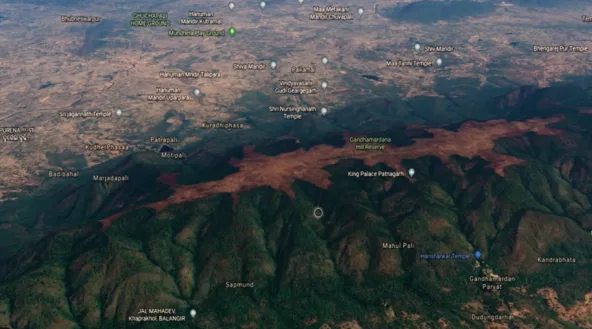
The Gandhamardan Hill range in Western Odisha, situated more than 1,300 km from Delhi, emerged as the central theme of one of India’s most successful environmental protection movements — the struggle of the 1980s known variously as the “BALCO Agitation” or the “Gandhamardan Bachao Movement.”
Despite being remotely located from the national and state capitals, receiving inadequate coverage from the mainstream English media and only half-hearted coverage in the Odia newspapers, and suffering the disadvantage of an area lacking communication networks and adequate financial support, this movement came out successfully — and with a set of unique characteristics:
- It was an inclusive green movement, where leadership and support came from all social groups — Scheduled Tribes, Backward Class, Scheduled Castes and general categories — and, importantly, women played a very prominent role in the movement.
- It was one of the longest-running environmental movements, occurring in two distinct phases from 1982 to 1989.
- It is the only environmental movement in India where local people erected and held the longest blockade of the road leading to the top of the hill — for about four years.
Phases of the Movement
The rise of the Gandhamardan Bachao Movement can be seen in two distinct phases.
The First Phase (1982)
The first phase was a short period of agitation that occurred in 1982, when Bharat Aluminium Company Ltd (BALCO) established a temporary base camp at Turla, on the Harishankar side of the Gandhamardan Hill. Under the leadership of the social activist and youth leader Shri Vivekanand Meher, local people boycotted company officials and staff, stopped company vehicles, and treated any local supporters of the company with hostility. These protest measures ultimately forced BALCO to shift its base camp from Harishankar to the Nrusinghanath side of the hill in 1983.
The Second Phase
The second phase began with the laying of the foundation stone for BALCO’s mining project at Paikmaal by the Union Minister for Mines, the late Shri N. K. P. Salve, and the Odisha Chief Minister, the late Shri J. B. Patnaik, on 2 May 1983. The initiation of the project was opposed by a group of students who protested spontaneously at Padampur, Bargarh — a protest the state machinery ruthlessly suppressed.
News of the opening of the BALCO office at Paikmaal, and of the students’ protest, troubled a number of concerned citizens and a section of the Arya Samaj Sanyasis based at Nrusinghanath. Seriously worried about the impact of mining on the environment, livelihoods, and the historical and religious sites at the foot of the Gandhamardan Hill, they contacted the renowned socialist, thinker, writer and Arya Samajik Shri Prasanna Kumar Sahu. Consequently, a meeting took place on 25 May 1983 at Nrusinghanath. Attended by Prasanna Kumar Sahu, Madanmohan Sahu, Sevanand Banaprashti and others, it resolved to protect the Gandhamardan Hill at any cost. With the support of the noted labour leader Shri Bhawanishankar Hota, Sahu led the passing of a resolution of the Chiroli Sangharsha Samiti terming BALCO an anti-Chiroli-dam entity, and a strong opinion was voiced for starting the “BALCO Hatao” movement.
Shri Prasanna Kumar Sahu visited the tribal-dominated villages that were to be most affected by BALCO’s mining, working to spread awareness of the importance of protecting Gandhamardan as a source of the region’s culture, environment and livelihood. He was convinced that without making local people aware of the essentiality of protecting Gandhamardan for their social welfare, nothing could be achieved.
On 16 August 1983, under his leadership, the “BALCO Hatao, Gandhamardan Bachao” movement was launched. That same night, an anti-BALCO public meeting at Mithapaali village drew a rousing response from the general public, who began openly speaking against the damaging consequences of mining at the top of the hill. The success of the Mithapaali meeting was beyond the imagination of the government machinery, BALCO and its corporate supporters. In a knee-jerk reaction, the state administration, BALCO and the ruling party began unleashing terror on village after village to suppress the rising public opinion — but this could only briefly dampen the public spirit. Through August 1983, village-level meetings were organised at Manabhang, Lukupali, Laudamaal, Kudeiphasha, Bikramnagar, Manikel and Meethapaali, where movement leaders such as Prasanna Kumar Sahu, Swami Gyananad, Paramanand Pradhan and Sevanand made consistent efforts to win the trust of the poor tribals — to help them overcome their indifference and their fear of state and corporate power, and to make them confident to fight for their rights over the local forest, water sources, and medicinal and non-medicinal plant resources.
The Straw that Broke the Camel’s Back
In 1984, BALCO began the formal process of bauxite mining — deep drilling, blasting and huge explosions at the top of the hill — along with large-scale felling of trees to build a motorable road to the summit. The damage to the environment and to local culture became evidently clear. The idol of the local people’s revered deity, Nrusinghanath, was stolen, and the temple’s structure was damaged by the force of the huge explosions. Anti-social forces were emboldened, and outside traders rampantly exploited forest resources while local people were deprived of access to forest produce and given inadequate compensation. The promised jobs for educated local youth never actualised, as most of BALCO’s staff were outsiders. Some local leaders supporting the mining began acting as agents of the company, spreading fear among the local people. The social, economic and ethical living of the community came under serious threat, and its livelihood was endangered.
All these anti-people effects of the BALCO project, from January 1984 to May 1985, provided a golden opportunity to the leaders opposed to the mining. Public meetings and awareness programmes were organised at Sambalpur, Padampur, Laudmaal, Kudheiphasha, Maanbhang, Baidpaali, Salepaali, Kansinha, Nuapaali, Sohela and elsewhere. Despite the indifference of many Western Odisha political leaders and influential citizens to the cause, Prasanna Kumar Sahu — in co-operation with Shri Birupaksha Naik, Bhawanishankar Hota, Murariprasad Mishra, Paramanand Pradhan and Bramachari Sudhir Kumar Behera — played a key role in spreading awareness of the irreparable damage to the local environment, livelihoods, natural resources including water, and religious centres. In May 1984, a signature campaign began on a public memorandum addressed to the Prime Minister of India under the banner “BALCO Hatao.” The Gandhamardan Suraksha Yuva Parishad was also formed under the leadership of Prasanna Kumar Sahu, with Niranjan Vidrohi, Gautam Biswal and Pankajini Rout serving as its first, second and third Conveners.
The Honourable High Court of Odisha initially stayed BALCO’s mining on 21 January 1985, but later allowed it on the basis of the company’s commitment that it would work in such a way that the environment and the cultural and religious centres would not be harmed in any way. When the Garuda-stambha was nonetheless demolished, widespread resentment followed among the local people. In June 1985, the leaders opposing the mining organised a camp against BALCO at Nrusinghanath to strengthen public awareness and opinion. They adopted an innovative strategy of “family replacement,” in which a number of student volunteers were each nominated as the son or daughter of an identified local tribal household and required to stay there for five days. During their stay, these adopted sons and daughters created extremely favourable conditions for shaping public opinion against the mining. The anti-BALCO agitation began spreading far and wide, covering Saintala, Belgaon, Bhawanipatna, Madanpur-Rampur, Khariar, Titlagarh and beyond.
Nearly 1,000 people — half of them women and children — were jailed for the blockade. The blockade still held.
In addition to coordinating widespread protests across Western Odisha, Shri Prasanna Kumar Sahu and the Gandhamardan Suraksha Yuva Parishad made several representations to the authorities in the Government of India and the Odisha Government on the disastrous consequences of bauxite mining atop the hill — for the local nature and ecology, the rare medicinal plant varieties, the water resources, the religious and cultural significance, and the agriculture, livelihood and aspirations of the local population. In December 1985, the Parishad adopted a blockade preventing BALCO’s vehicles — and private vehicles carrying materials for its operations — from proceeding up to the mining sites on the Gandhamardan plateau. Nearly 1,000 people, half of them women and children, were jailed for the blockade and for leading the protests. The blockade was still in place when the Government of Odisha finally decided to stop the mining project altogether, with effect from 15 September 1989.
Why the Movement Succeeded
Several factors explain why the Gandhamardan movement took hold and ultimately prevailed.
A Land of Faith and Pilgrimage
Spread across the Bolangir and Bargarh districts of Odisha, the Gandhamardan Hill is a sacred land of faith, with the Nrusinghanath Temple on the Bargarh side and the Harishankar Temple on the Bolangir side. These ancient temples, dating from the 9th to the 14th centuries, are important pilgrimage sites for the people of Odisha and Chhattisgarh. The epic of the Ramayana lends the hill further significance, as the peak from which a portion was said to have been plucked and carried by Hanuman during the battle for Lanka. In sanctioning the mining project, the state government did not take into account the possible damage to the cultural and religious significance of the hill for the local Hindu and tribal communities.
An Inadequate Cost-Benefit Assessment
The cost-benefit assessment for the project was not done properly; in particular, it significantly underestimated the environmental damage to medicinal plants, forests, the water system and agriculture. The Gandhamardan Hill possesses extremely high-quality bauxite deposits, spreading over a length of 12.8 km along the hilltop and estimated to sustain supply for more than thirty years. BALCO was granted deforestation permission for an area of 162.48 hectares, of which 107 hectares lay on the hilltop where mining was to be undertaken. Within a 10-km radius of the mining area stood 63 villages, about 61% of whose residents were tribals. Yet the impact assessment report for the project was not comprehensive about the possible damage to environment and livelihood.
The Damages That Drew People’s Concern
- A land of rivers. Gandhamardan is a source of over 830 streams — including major streams such as the Rani Jharan, Nrusinghanath Jharan, Gupteswar Jharan, Durgei Jharan, Kumuri, Kuhura and Harishankar — of which about twenty-two are perennial in nature. Many of these streams merge to create Odisha’s Ong and Suktel rivers, which later join the Mahanadi near Sonepur.
- The richest flora and fauna. With its diversified topography and perennial streams, Gandhamardan created a rich environment for the plentiful growth and diversity of plant resources, making it an attractive place for researchers and scientists since the British period. Surveys and studies by H. H. Haynes (1921, 1925), Herbert Muni (1950), Gopinath Panigrahi (1963, 1964), M. Brahmam and Hari Om Saxena (1990), and R. C. Mishra (1990, 1996) confirmed the existence of a large number of plant species, the maximum catalogued being 781. Of these, about 300 possess medicinal and semi-medicinal properties, some of them rare Ayurvedic herbs. No wonder the Gandhamardan Hill range is also known as the “Ayurvedic Paradise.”
- The livelihood of local communities. The livelihood of the tribal communities is mostly dependent on Gandhamardan. The local landless and the majority of small and marginal farmers eke out their living by collecting forest produce — wood, fruit and medicinal herbs — for both consumption and marketing. Furthermore, the sustenance of local agriculture and the availability of safe drinking water both depend directly upon the water flowing from the hill.
Clear and Present Danger
Even though BALCO’s attempt to mine bauxite in the richly biodiverse Gandhamardan Hill was stopped three decades ago, the threat to the hill’s ecology and to the livelihood of the local population is increasing. As crony capitalism reaches ever-higher levels in India, big businesses with mining interests in the aluminium sector increasingly look to this hill as a source of profit, and Gandhamardan is once again under threat.
Rising commodity prices, the corporate lobby and crony capitalism led the Government of Odisha to revisit its decision on the hill. In the late 1990s, the state government decided to develop the Gandhamardan bauxite deposit through the Orissa Directorate of Mines (ODM) — which held statewide ownership of all mineral rights — and its wholly-owned subsidiary, the Orissa Mining Corporation (OMC). On 1 October 1996, OMC signed an MOU with Continental Resources (USA) Limited (CRL), a wholly-owned subsidiary of Balaton Power Inc., to establish a joint venture to mine bauxite from the Gandhamardan Hill. A revised joint venture agreement signed on 18 April 1997 envisaged an integrated aluminium complex in Odisha, with an alumina refinery to be fed by the hill’s bauxite; under it, Continental Resources was required to set up that complex near the Gandhamardan area and to use the bauxite from the mines as its raw material. In September 2010, CRL’s consultants travelled again to India to hold meetings with representatives of OMC and the Government of Odisha in an effort to advance the project — discussing, among other things, a new mining law expected to take effect in early 2011 that would standardise how people affected by mining are to be protected and compensated.
As governments at the centre and in the state increasingly act under the influence of economic gain and corporate entities, the protection of Gandhamardan appears an uphill task. The local people’s past victory in conserving the hill’s rich biodiversity, forests, culture, religious places and livelihoods is no guarantee that the battle is over. But any mining activity at the top of the Gandhamardan Hill is sure to cause great loss to the rich biodiversity and environment of India — the loss of rare Ayurvedic plants, damage to livelihoods and the water system, and the erosion of the cultural heritage of the local population.
