


| Type | Journal article (empirical study) |
| Title | “Outward FDI and Knowledge Flows: A Study of the Indian Automotive Sector” |
| Authors | Jaya Prakash Pradhan & Neelam Singh |
| Published | 2009 · International Journal of Institutions and Economies, 1(1), pp. 155–186 · University of Malaya |
| Data | Indian automotive firms’ outward FDI and in-house R&D · 1988–2008 |
| Read | Full text (open access) |
This is a plain-language summary of “Outward FDI and Knowledge Flows: A Study of the Indian Automotive Sector” (Pradhan & Singh, International Journal of Institutions and Economies, 2009).
In short:
- When companies from a developing country invest abroad, the usual assumption is that they go to learn from advanced markets. This study of India’s auto sector finds something more interesting: knowledge flows both ways.
- Investing abroad measurably raises a firm’s R&D back home — and the effect is strongest for investment in developed markets.
- The benefit holds for both wholly-owned subsidiaries and joint ventures, and grows with the scale of investment.
India’s auto firms go global
India’s automotive industry spent decades as a protected domestic market. Then it began to globalise — and not just by exporting. Firms like Tata Motors and Mahindra & Mahindra started setting up plants, forming partnerships, and acquiring companies abroad, through both greenfield investment (building new facilities) and acquisitions (buying existing foreign firms). The question this study asks is what that overseas push does to innovation at home.
A two-way street of learning
The conventional view treats outward investment from a developing economy as a one-way pipe — knowledge runs from the advanced market back to the emerging-market firm. The evidence here is more reciprocal.

In one direction, Indian firms bring something foreign operations value: frugal, cost-effective engineering, skill at building vehicles suited to price-sensitive markets, and process and quality innovations developed under tight constraints. In the other, Indian firms gain access to advanced technology, cutting-edge R&D, an understanding of mature-market customers, global quality and safety standards, and modern management practice. The relationship is an exchange, not a hand-out.
The R&D payoff at home
The heart of the paper is a quantitative test: does outward FDI actually lift a firm’s in-house R&D? Over 1988–2008, the answer is yes. Firms with international operations invest more in domestic R&D, and three features stand out: the effect is strongest when the investment goes to developed markets, it holds for both wholly-owned subsidiaries and joint ventures, and it grows with the scale of the overseas commitment. Going abroad, in other words, doesn’t hollow out home-country research — it strengthens it.
Developed vs developing markets
Indian firms benefit from investing in both kinds of market, but for different reasons:
| Developed markets | Developing markets |
|---|---|
| Stronger R&D benefits | A place to test new capabilities |
| Access to cutting-edge technology | Familiar, similar market conditions |
| Exposure to stringent regulation and standards | A base for regional expansion |
| Global brand credibility | Manufacturing cost advantages |
What makes the learning stick
Going abroad doesn’t guarantee learning. The study highlights what separates firms that absorb foreign knowledge from those that don’t: absorptive capacity (enough in-house R&D to understand and adapt what they find), strategic intent (clear goals about what to acquire), local partnerships that speed up learning, the scale of the investment, and sustained management commitment to capability-building over the long term.
What it means
For companies, the lesson is to treat international expansion as a learning strategy, not just a market-access play — and to keep investing in domestic R&D, because that is what lets a firm absorb what it encounters abroad. For policymakers, it makes the case for supporting outward investment in strategic sectors, helping firms find overseas opportunities, backing domestic R&D, and easing international technology partnerships.
Read the academic abstract
In recent years, developing countries have emerged as significant participants in OFDI (outward foreign direct investment), seeking strategic assets. Such asset exploiting-cum-augmenting OFDI involves potential two-way cross-border knowledge flows. This study examines several dimensions of OFDI in the Indian automotive industry — currently internationalising rapidly in terms of OFDI. It undertakes a quantitative analysis of the influence of OFDI activities on the in-house (domestic) R&D performance of Indian automotive firms during 1988–2008, and finds the expected favourable impact on R&D intensity. The study concludes with suggestions to promote OFDI, particularly strategic-asset-enhancing OFDI.Cite this article
Pradhan, J. P., & Singh, N. (2009). Outward FDI and knowledge flows: A study of the Indian automotive sector. International Journal of Institutions and Economies, 1(1), 155–186.
Read the full paper (open access) →
Related on this site
- The big-picture story this sits within: Giants Awakening — The Story of Indian Companies Going Global
- On the strategic-asset-seeking motive behind such investment: Emerging Giants: How Indian Multinationals Are Shaping the Global Economy
- On what shapes firms’ R&D more broadly: Why Location Matters: The Geography of Innovation in Indian Manufacturing
Further Reading
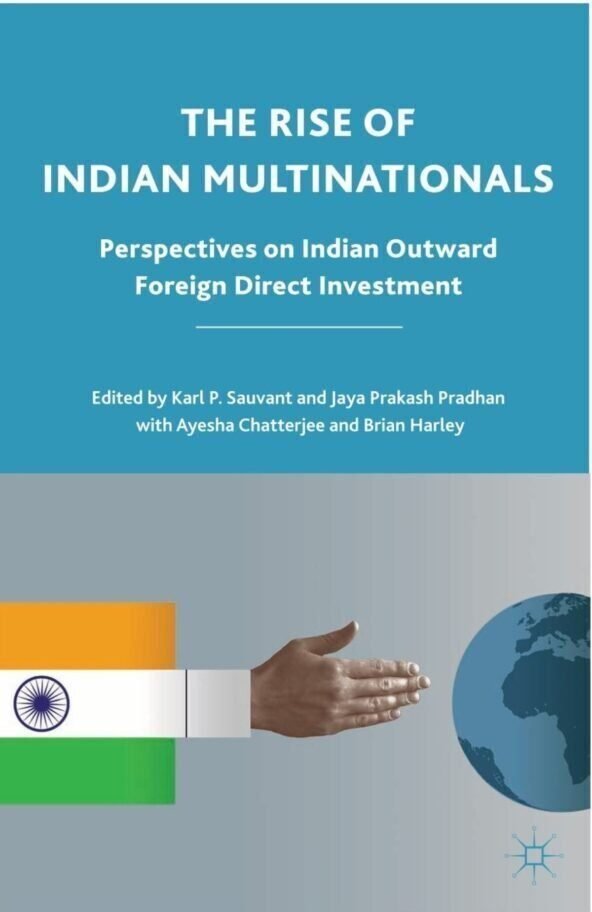
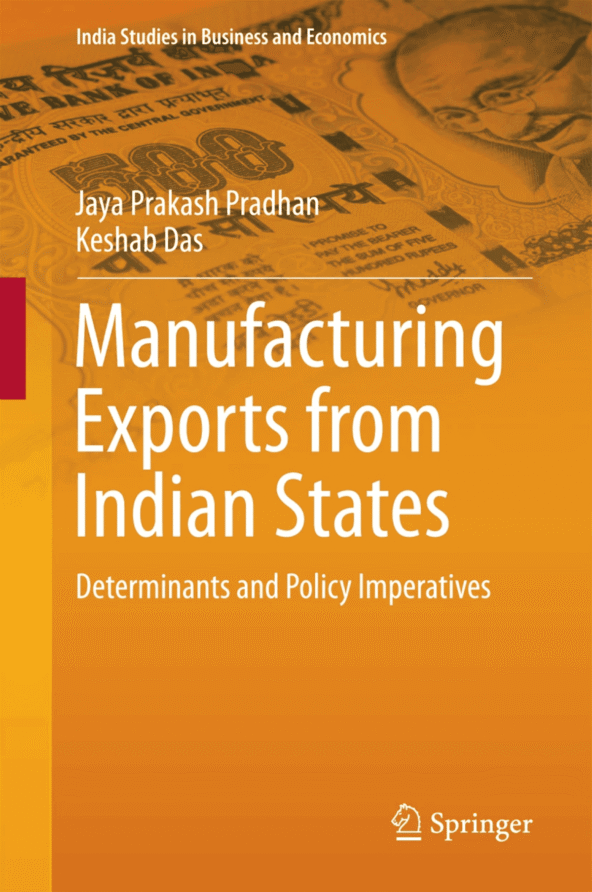
As an Amazon Associate I earn from qualifying purchases.